
Sterling Resident Records to Compare
No single public list identifies every person who lives in Sterling. The most useful resident lookup starts with the Loudoun County property database when an owner or address is known, then separates ownership from residence. Virginia court records, voter-list rules, vital-record indexes, deed files, and state credential registers each preserve a different slice of identity. Sterling has no city clerk or municipal court. Loudoun County offices and statewide Virginia custodians hold the records that matter here.
| Record | What It Confirms | Where | Access |
|---|---|---|---|
| Property and tax roll | Named owner, parcel, situs and mailing address, sales history | Loudoun iASWorld | Free public search, updated weekly |
| Recorded deed | Grantor, grantee, instrument, legal description and transfer date | Loudoun TrakRecord and Clerk terminals | Index and copy workflow; terminals support research |
| Court docket | Party, case, hearing and disposition details | Virginia case information | Free status index; full files remain with the Clerk |
| Voter record | Statutory public list fields and an individual’s own status path | Virginia Citizen Portal | Public fields and list use are limited by statute |
| Vital record | Name, date and place in a public index, or an eligible certificate | VDH Office of Vital Records | Indexes and copies follow separate release rules |
| State credential | Licensee name, credential and public status where shown | Virginia DPOR | Free lookup; online data can lag the agency record |
Use an address-first record when the question is about a parcel, and a name-first court or credential index when the address is uncertain. A tax mailing address may belong to an agent, trust, or owner who lives elsewhere. The public property roll is evidence of ownership, not a complete Sterling household list. A dated court or deed result also needs a second matching field before it is attributed to a resident.
Sterling Resident Lookup Uses County Custodians
It is easy to look for a Sterling city office that does not exist. Sterling is a Loudoun County census-designated place, so deeds, probate, marriage licenses, and circuit court files are kept by the Loudoun County Clerk of the Circuit Court in Leesburg. The Commissioner of the Revenue supplies the public property layer, and the county mapping office supplies WebLogis. That record geography explains why an official Sterling resident lookup may lead to a county portal or a Virginia agency rather than a local municipal desk.
The Clerk’s land-record collection is available for public research from 1757 to the present. Remote TrakRecord access is useful for locating an index entry or obtaining a copy, while public terminals and a defined copy request remain the fallback for records that cannot be fully resolved online. Court documents are also more office-oriented than their status screens. The online result is a locator, not proof that every filing, image, or protected detail is available remotely.
Sterling Court Lookup Search Paths
The Virginia courts split the search by court type. In the Circuit Court case search, select Loudoun Circuit Court, choose Civil or Criminal, and search by name, case number, or hearing date. The general district system searches one court at a time by name, case number, or hearing date, with Current, Archived, and All data-status choices. Current general district data refers to cases entered or heard after January 2007; archived data is earlier.
The Virginia Circuit Court search screen is a useful Sterling resident lookup starting point when a party name needs a date, division, or case-number check.
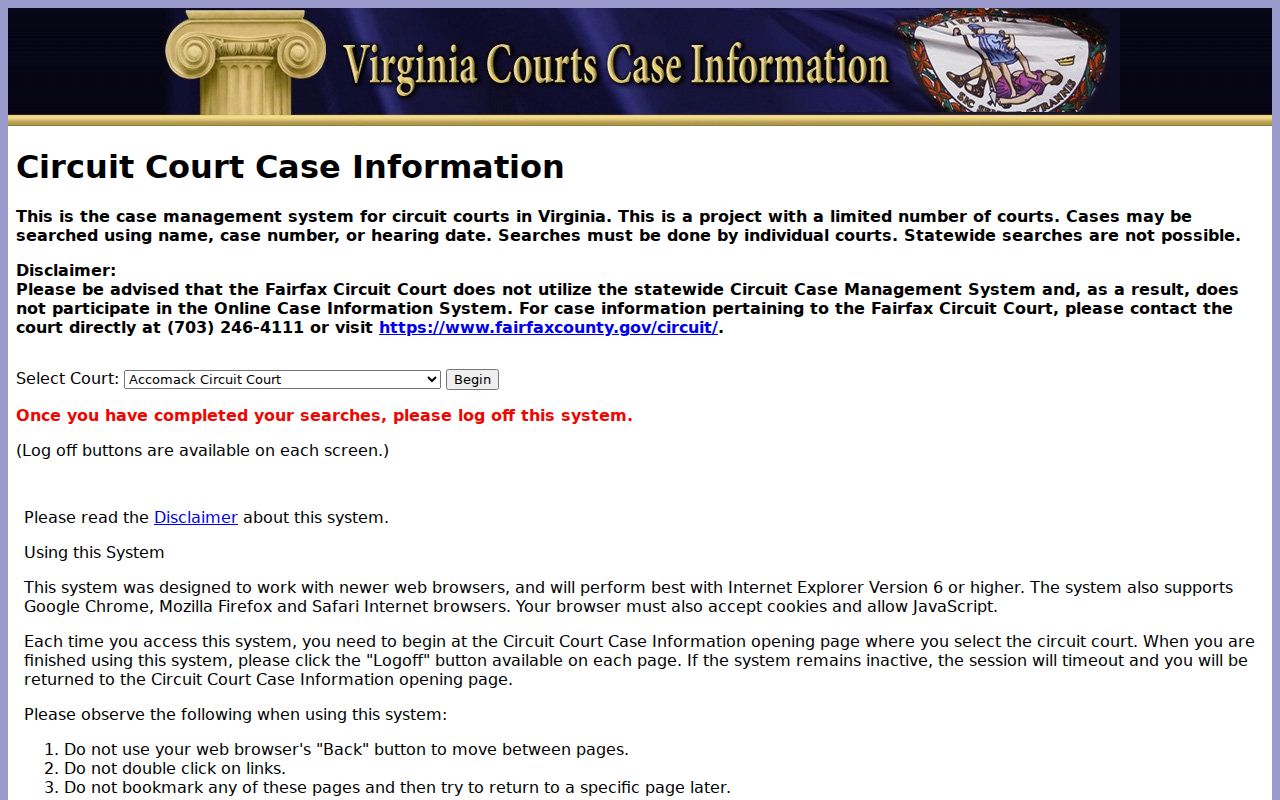
Choose the Loudoun court and then keep the division and search mode with the result notes. A similar name in another locality, or in the wrong division, is not a match by itself.
The Loudoun General District Court search is separate and supports partial names as well as its case and hearing-date modes.
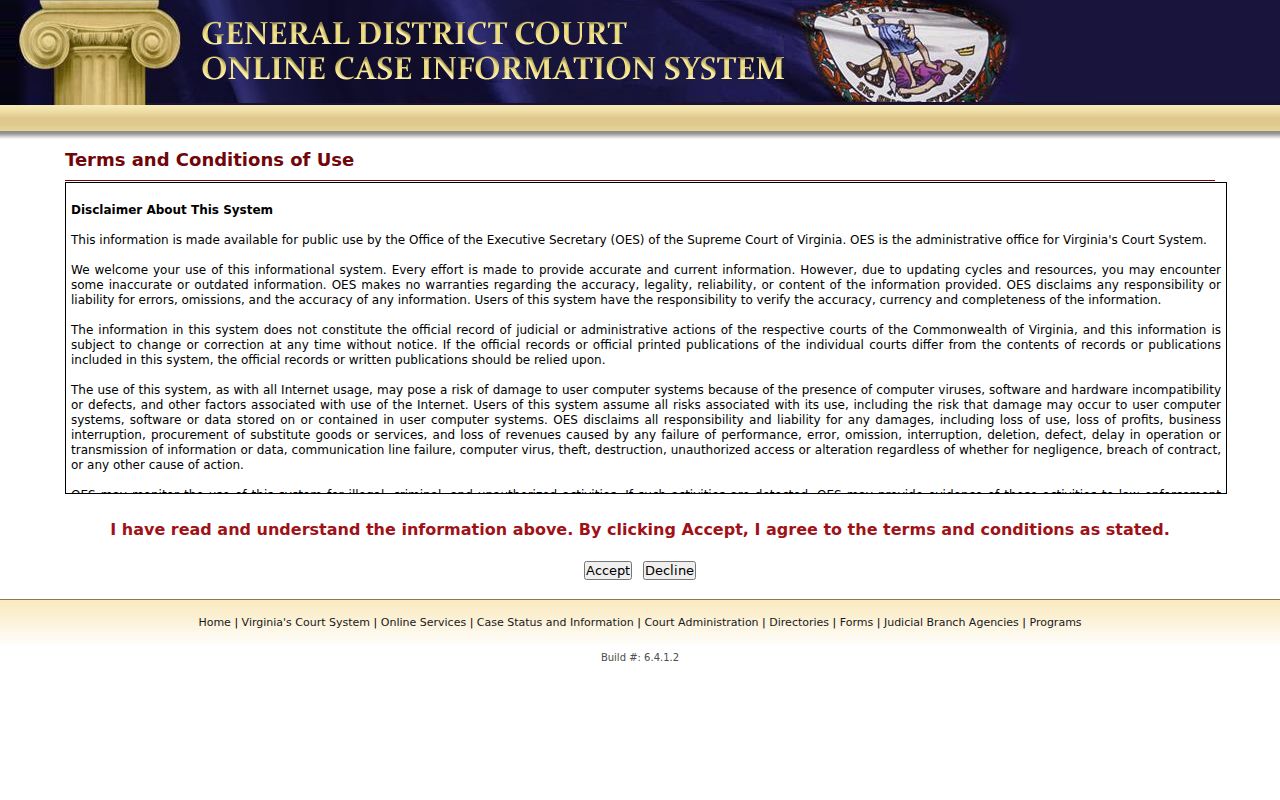
Its detail screens can include service or process information and reports due, so record the court, date, and case number before deciding that two results concern one person. JDR matters are not generally available through a public name search because of confidentiality protections.
Court Fields for a Sterling Resident Lookup
A court index can help separate same-name candidates when it is read as a structured record. Loudoun Circuit Court instructions describe party information, hearings, final disposition, and a pleadings or orders tab. General District results use their own case-detail path. Neither system should be read as a complete criminal history or a full court file. Sealed, expunged, juvenile, adoption, and protected family-law material has separate limits.
| Court | Name-search route | Indexed result and access |
|---|---|---|
| Loudoun Circuit Court | Select Loudoun, then Civil or Criminal; use name, case number, or hearing date | Party, hearings, disposition, and pleading or order index; documents are with the Clerk |
| Loudoun General District Court | Select the court; search name, case number, or hearing date with Current, Archived, or All status | Case details can include service or process and reports due |
| Loudoun JDR District Court | Contact the clerk about a permitted record route | Case information is not generally available in a public name search |
A sample docket or result inventory can include the court and division, party name, case number, case type, hearing date, courtroom, judge, hearing event, disposition or judgment, final-order date, and pleading filed date. Entries can also identify the document type, filing party, book or page, and remarks. For a particular document, use its case number and document name or date with the Clerk’s copy-request route. The Clerk’s public kiosks are available at 18 E. Market Street in Leesburg, and staff can provide procedural information. They cannot disclose protected material or give legal advice.
Verify a Sterling Resident Lookup
Begin with a name variation and a locality, then require two independent matching details. A careful sequence can start with the county owner or combined property search, preserve the parcel identification number and the distinction between situs and mailing address, then compare a court index result with a date, middle initial, suffix, or address. Only after those details align should a person be connected to a recorded deed, a public vital index, or a state credential.
- Search the Loudoun real-property search by owner or combined fields and record the PIN, legal description, record date, and both address types.
- Test spelling variants in the appropriate Loudoun court index. Keep the court, case number, division, hearing date, and disposition separate from the person’s address notes.
- Use the Citizen Portal only for an authorized individual’s own status, or inspect a legally available voter list through Elections under its statutory rules. Do not infer a full household from registration data.
- Compare a public vital index only when its date and locality fit. Ask the custodian for a certified copy only when the requester is statutorily eligible and the document is needed.
The Virginia Citizen Portal presents the state’s registration-status, polling-place, absentee, and voting-history entry points.
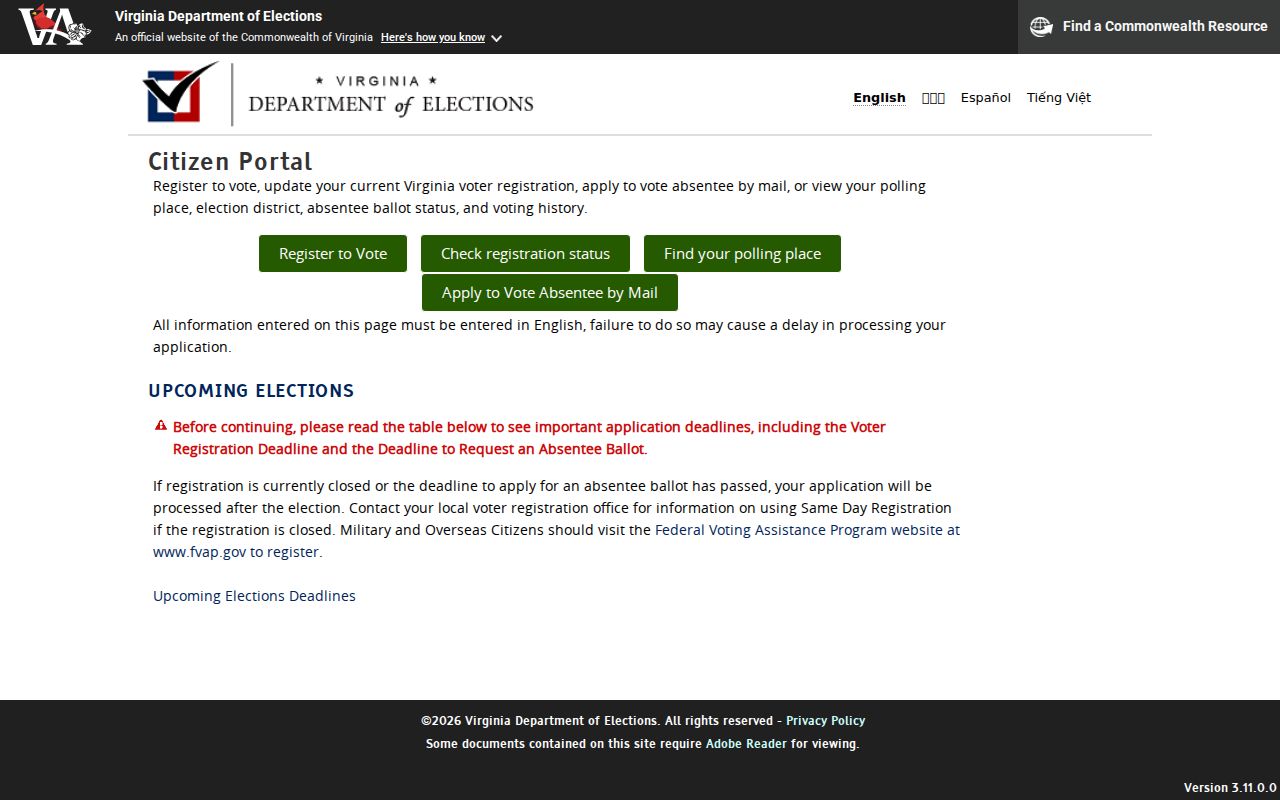
Use that official path to check an authorized person’s own registration details. It does not turn nearby addresses into a public household list.
- Docket
- A court’s chronological case record, usually showing parties, events, hearings, and outcomes rather than every document image.
- Index and image
- An index points to a record by name or number. An image is the underlying document, which may require a Clerk request, a terminal, or payment.
- Certified copy
- A custodian-issued copy that bears its official certification. It is different from an ordinary screen result or downloaded index entry.
Same-name matches are common. Do not merge an owner, a court party, a voter-list entry, and a licensee simply because each includes Sterling. A unit number, PIN, event date, middle initial, or directly related legal description is a better cross-index check. If a record is wrong, contact the office that created it rather than trying to correct it through another system.
Sterling Vital Records Release Rules
Virginia Department of Health, not a Sterling municipal office, is the statewide custodian for birth, death, marriage, and divorce certificates. Under Va. Code § 32.1-271, a birth record becomes public after 100 years. Death, marriage, divorce, and annulment records become public after 25 years, unless another law, court order, or law-enforcement request prevents release. Those limits apply even when a person’s name appears in an index.
The VDH vital-records application information explains the identification, eligibility, and request routes for a Sterling resident lookup involving a life event.
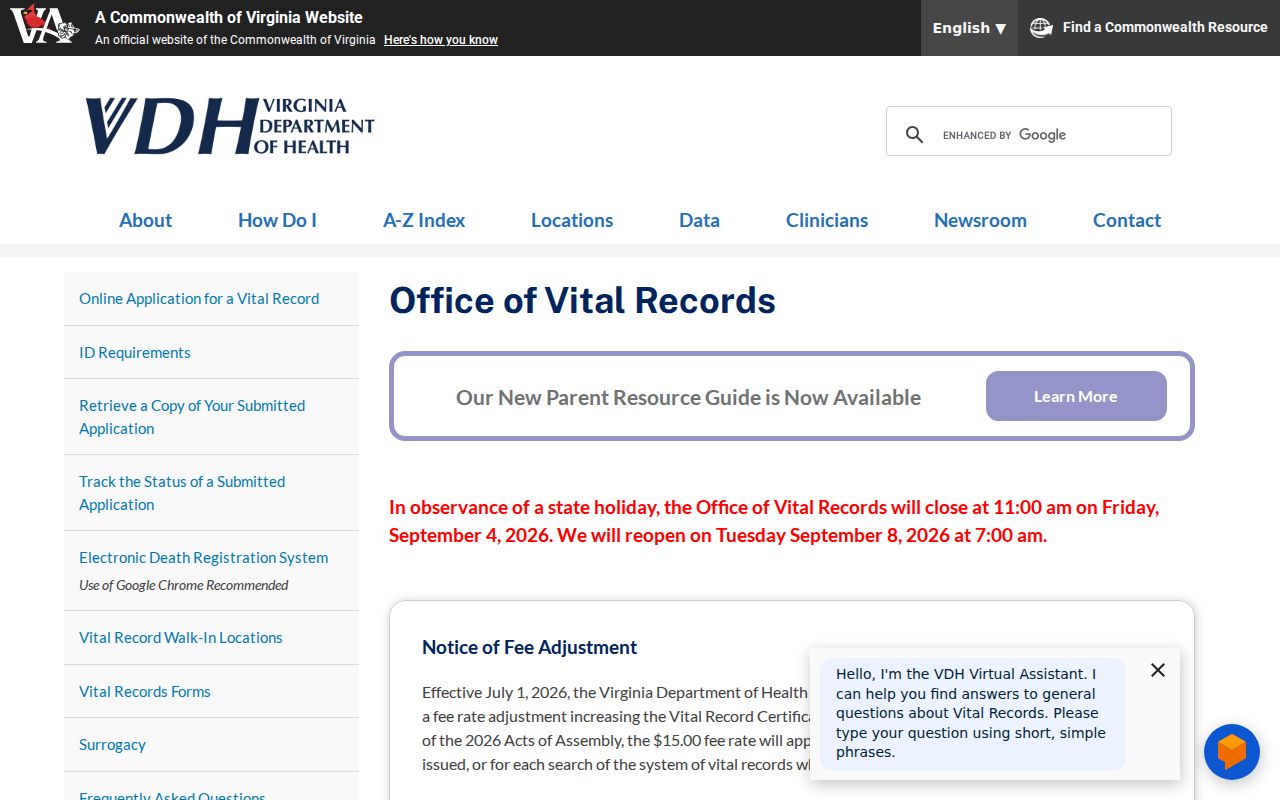
Current certified copies generally require an eligible requester and ID. VDH lists a $15 certificate or search fee, while the Virginia DMV vital-record route lists a $17 records-search fee. Mail, VDH walk-in service, and eligible DMV customer-service access are documented routes; a library notary does not issue a certified vital record.
For older research, VDH genealogy information directs researchers to public material, including Library of Virginia microfilm for surviving 1853 to 1896 birth and death records and marriages before 1936. An index is a historical lead, not a substitute for a current restricted certificate.
Sterling Resident Lookup Source Comparison
Official records and commercial category tools serve different purposes. County and state sources disclose their custodian, fields, update context, and legal limits. The property database is free and updated weekly, while land-record images or certified copies can carry copy fees. Court status screens identify cases, but full documents may require the Clerk. A commercial data-broker category can combine old public records, marketing information, self-reported material, and purchased data without making a protected source public.
| Source type | Strength | Limit |
|---|---|---|
| County or state custodian | Defined record purpose, official field set, correction route | May be index-only, dated, or restricted |
| Court or deed index | Case or instrument reference for a defined file | It does not establish identity from a name alone |
| Commercial category tool | May surface leads from mixed sources | Can be stale, merged, incomplete, or inaccurate |
A resident lookup is stronger when an official source supplies a record number and a second official source confirms a dated, personal detail. Private profiles do not unlock court, voter, vital, DMV, or ACP-protected records. A correction or privacy request also belongs with the source that created the record.
Note: Confirm an unexpected deed, court payment request, or credential notice through the official custodian’s published contact route before sending money or identification.
Sterling Resident Lookup for Family Trails
Some searches are about a family connection rather than a current address. An heir is often identified through a probate file, will, guardianship matter, or estate deed at the Circuit Clerk. Ask for a specific case or index reference. A deed transfer after an estate proceeding can help connect a legal description to a later owner, but it still does not establish a present household roster.
Virginia’s Adoption Disclosure program is the proper route for a qualifying birth-family search. It is not a public birth-record search. The program describes rights for adult adoptees, adoptive parents, birth parents, and adult birth siblings, and identifying information requires its defined search and permission process. For former classmates, historical yearbooks, local newspapers, and library collections are more suitable than claiming current contact information.
The Virginia Department of Corrections locator has first-name, last-name, and DOC-ID paths for its own custody records.
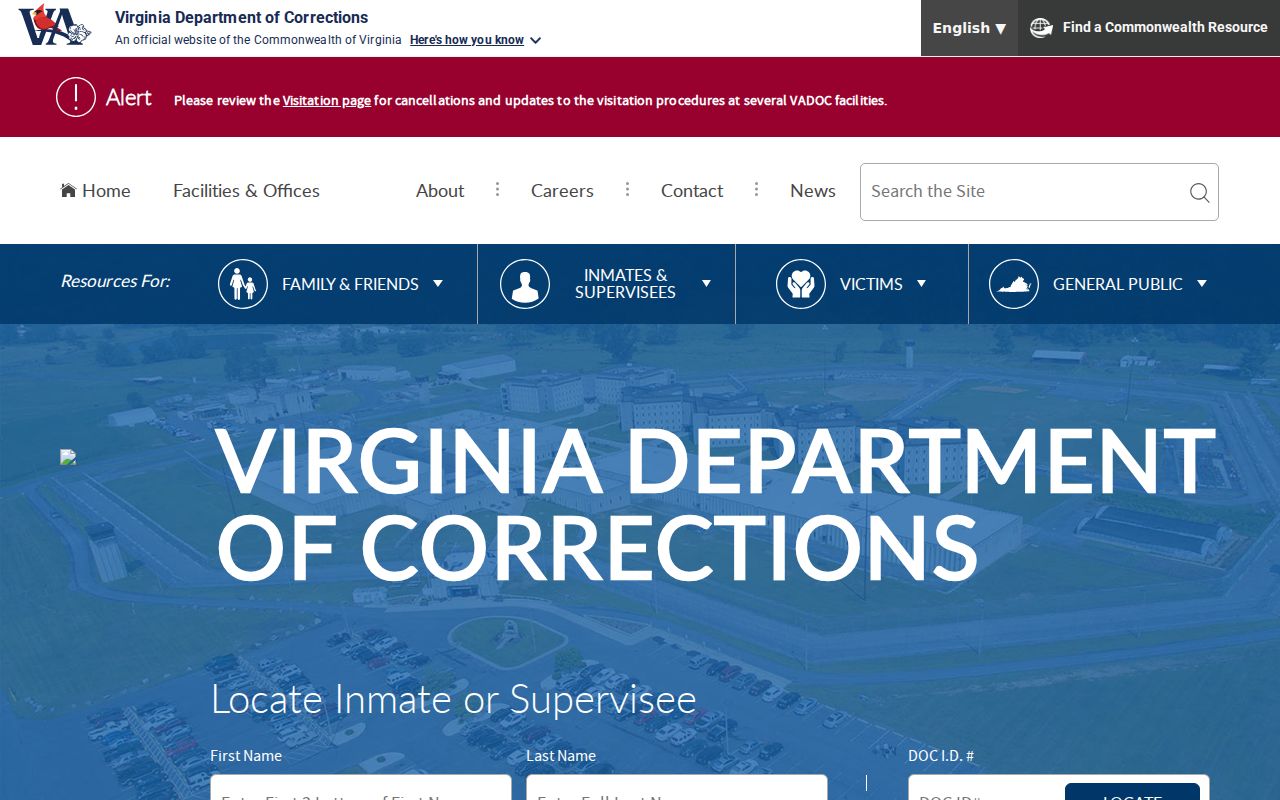
The locator is updated daily but can be outdated or incomplete, and a missing result is not conclusive. It is not interchangeable with a Loudoun court docket or the county detention-center page.
A Virginia DPOR license search accepts a name, license number, address, or license type and offers advanced search.
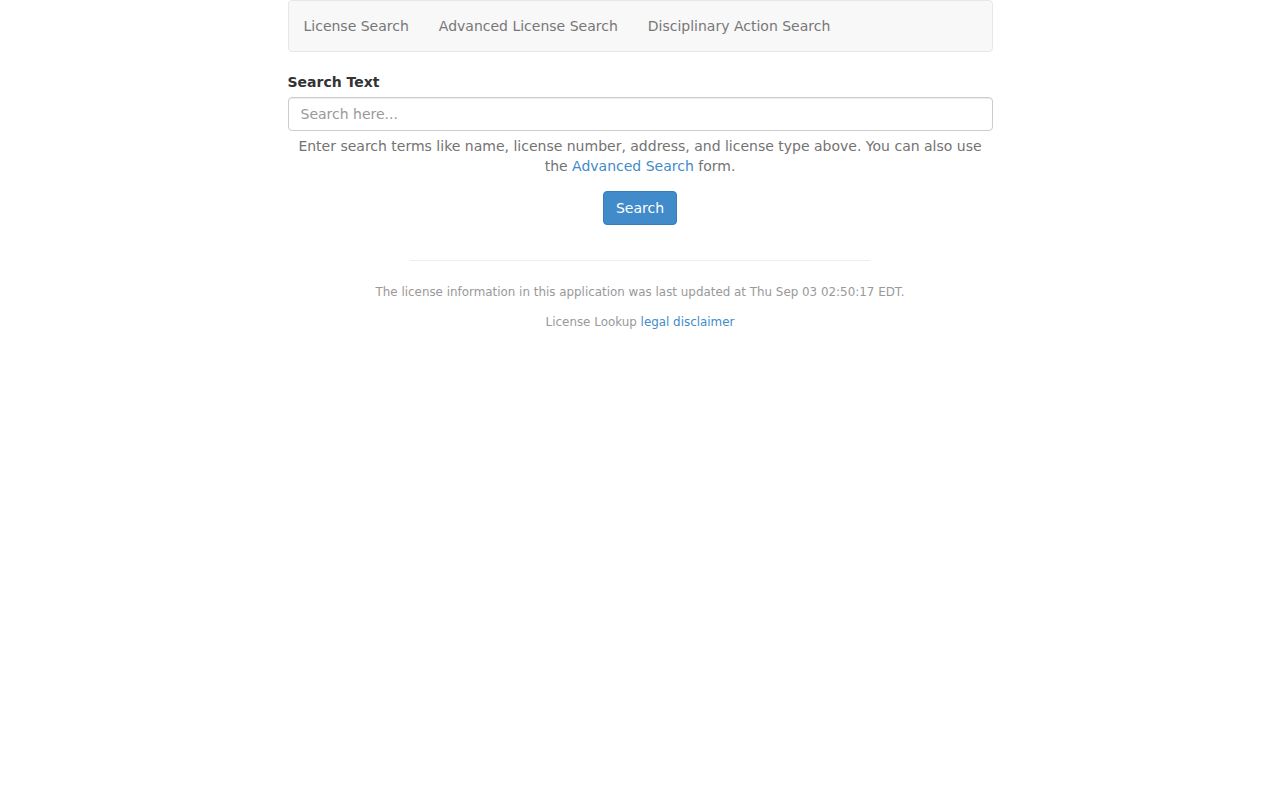
A credential or filing can establish an affiliation clue and public status where shown. It is not a residential address confirmation, and DPOR notes that online information may lag document processing.
Sterling Resident Lookup Privacy Limits
Virginia law leaves important gaps in a name search. The public voter-list fields in Va. Code § 24.2-444 exclude Social Security numbers and day or month of birth, among other items. Section 24.2-405 restricts list recipients and prohibits searchable Internet publication. DMV address information is closed by separate law. Court, juvenile, adoption, and vital-record restrictions also remain in force.
The Virginia Address Confidentiality Program provides a substitute address and mail-forwarding protection for qualifying people. Its actual address records are FOIA-exempt under Va. Code § 2.2-515.2. Protected addresses, sealed files, and JDR records are not missing data to work around. They are legal boundaries. A Virginia FOIA request may seek existing nonexempt county records, but it does not require an agency to create a new record or disclose protected information.